
 +61 414 638 895
 Authentic Leadership Starts With the Values You Actually Live
What if the values we proudly talk about aren’t actually the ones running the show? That question has been on our team's mind since Eva's conversation with Matt, because values are everywhere in organisations: on office walls, in strategy documents, recruitment processes, and leadership presentations. But there can be a big difference between what an organisation says it values and what actually guides people when things get difficult. Authentic leadership starts with looking beyond those statements and understanding the values that shape how we think, make decisions and behave. These values influence how we respond to pressure, work with others and show up as leaders.
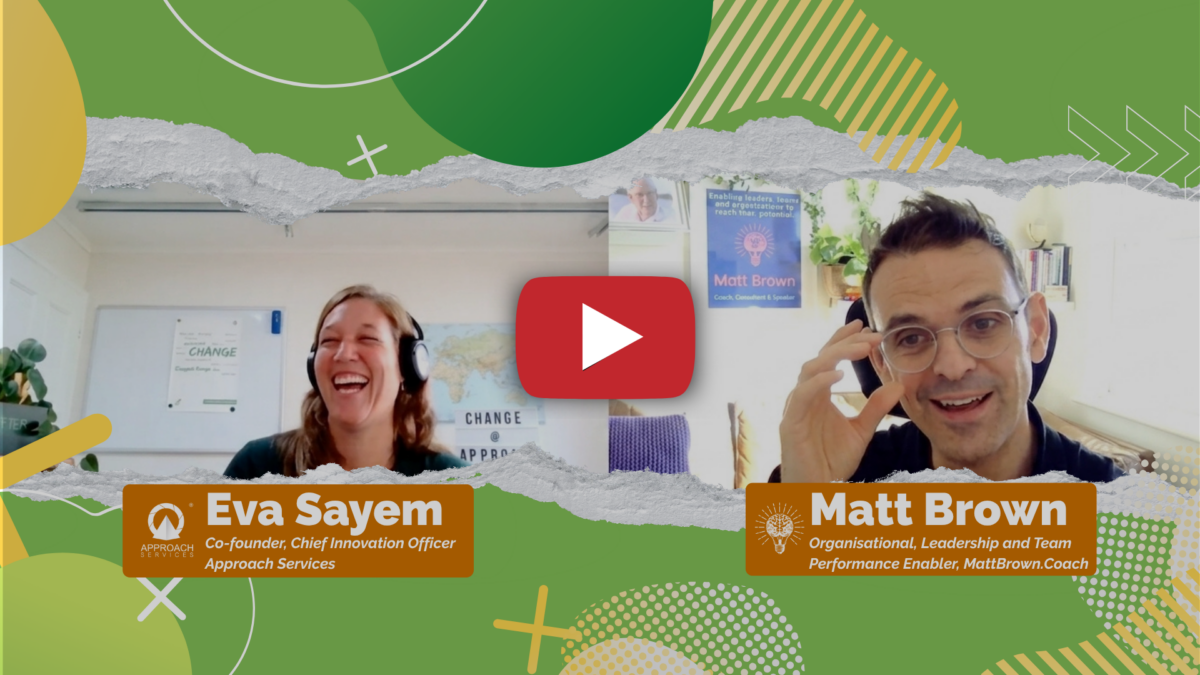
This idea was at the heart of a recent conversation between Eva Sayem and Matt Brown about authentic leadership, personal values and how leaders bring values to life. They explored everything from personal reflection and leadership practice to organisational culture, psychological safety, continuous improvement and recruitment. One message stood out: values become useful when they help us decide how we want to show up, especially when things feel uncomfortable or uncertain.
For Matt, values are like lenses. They help us look at situations in a way that supports the person we want to be and give us greater confidence to act accordingly. Eva brought another perspective that values are also shaped by our history, culture and lived experience, which means some of the principles guiding us may feel so fundamental that we never think to name them.
That observation is important because it changes the way we think about values. They are not simply words we choose because they sound desirable. Some are deeply embedded in how we have been brought up. Others have emerged from experiences that shaped us. Some may be values we aspire to strengthen over time.
The work of authentic leadership begins when we become curious about all of them.
Values need reflection, not just definition
Matt described how his own values have helped him navigate difficult professional situations. Integrity and accountability, for example, have given him a basis for speaking openly when something does not feel right, even when doing so is uncomfortable. He also described being "patient but relentless", giving himself permission to take his time while continuing to move forward.
The interesting part is that these values do not matter simply because they have been written down. Their real value comes from providing a reference point when a decision has to be made.
That suggests a different way of thinking about personal values. Rather than asking someone to select a handful of words from a list and move on, the conversation can go deeper.
Those questions turn a values exercise into self-reflection.
Eva also raised the distinction between aspirational values and practised values. An organisation may say it wants to become more trusting, collaborative or respectful, while its everyday behaviours tell a different story. The distance between those two things matters. When the stated values and lived experience are too far apart, people notice, and trust can erode.
The same principle applies personally. There may be values we want to embody more strongly but do not consistently practise yet. That gap is not necessarily a problem. It can become useful information about where growth is needed.
What matters is being willing to look at the gap honestly.
Authentic leadership requires more than being yourself
One of the most revealing parts of Matt's story was his experience of being told by a leader that he needed to be more authentic.
His first reaction was essentially, "You don't know who I am." He had always considered himself authentic. Yet his leader had seen him in social settings and with his family and noticed a difference between that version of Matt and the person colleagues experienced at work.
Over time, Matt began bringing more of himself into his professional life. That did not mean sharing everything with everyone or abandoning professional judgement. It meant recognising that there had been a separation between "home Matt" and "work Matt", and considering what it would look like to reduce that gap.
That idea connects closely with resilience. When people spend substantial energy behaving in ways that feel disconnected from who they are, work can become more draining. When their behaviour is more closely aligned with their values and sense of self, they can have a stronger internal foundation from which to respond to pressure.
Authenticity, then, is not simply a licence to say whatever comes to mind. Matt linked it with emotional intelligence, including self-awareness and social awareness. Knowing yourself matters, but so does understanding how your behaviour affects other people and the environment around you.

That balance is especially important for leaders. Being authentic does not remove the responsibility to communicate thoughtfully, listen well or adapt your behaviour to the needs of others. It gives you a clearer sense of what you are adapting without losing sight of who you are.
Organisational values are tested in behaviour
The conversation became particularly practical when Eva and Matt discussed why organisations struggle to turn values into everyday behaviour. Matt shared an example of a client that had introduced regular “values gemba” conversations. Leaders would visit different departments or the shop floor and ask employees how a particular value had been demonstrated that week, and how they might demonstrate it in the week ahead.
It was a simple practice, but it gave the values somewhere to live. They became part of conversations, observations and reflection rather than words sitting on a poster. The same approach can work in one-on-ones, where leaders can talk about how values show up in an employee’s work alongside performance and outcomes.
Eva shared a similar example from her own experience, recalling a senior leader who made a point of walking around a large organisation and speaking with people informally. Those regular interactions helped him stay connected to what was happening beyond the formal channels of the business.
Both examples point to the same idea that authentic leadership is often seen in the small, repeated behaviours that show people what an organisation really values.
Values are lenses that we want to look through to allow us to be the person that we want to be.
-Matt Brown
What gets measured and rewarded tells people what really matters
Another powerful example came from Matt's experience of an organisation that assessed both results and behaviours.
Someone could deliver outstanding results but receive a weaker overall assessment if their behaviours were inconsistent with the organisation's expectations. Conversely, strong behaviours were recognised even where results were not yet where they needed to be.
That kind of system sends a much clearer message about values than a poster ever could. It tells people that how the work gets done matters alongside what gets achieved.
The same principle can be applied across the employee lifecycle. Values can influence recruitment conversations, onboarding, regular performance discussions, recognition and promotion decisions. When the same expectations appear consistently across these systems, values have a much greater chance of becoming part of organisational culture.
This also helps explain why values can become difficult during periods of change. Introducing a new set of values may require leaders to challenge behaviours that have previously been accepted as normal. That can mean uncomfortable conversations, accountability and, sometimes, decisions that disrupt established ways of working.
Without that work, the organisation may simply acquire a new set of words.
Values do not always need to agree
An interesting part of the discussion was the idea that values can sometimes pull against each other.
Matt recalled an organisational tension between excellence and the idea of progress over perfection. Both were desirable, but they could create different instincts in practice. Excellence might encourage people to improve quality, while progress over perfection might encourage experimentation and movement before everything is fully refined.
Rather than treating that tension as a flaw, Matt suggested it can create useful conversations. Leaders can ask when one principle should take precedence over another and what circumstances should influence the decision.
That is a more mature approach to values. Real work rarely provides perfect conditions in which every value points in exactly the same direction. Sometimes leadership means making a judgement about which principle matters most in that situation and being able to explain why.
Eva also raised an important caution around values and recruitment. Seeking alignment can become counterproductive if it results in teams made up of people who think in the same way. Values can provide a shared foundation, but organisations also need different experiences, perspectives and ways of thinking.

Matt described coaching a first-time leader who initially intended to recruit people with backgrounds very similar to his own. The challenge was to deliberately consider candidates who felt less familiar. The purpose was not to create difference for its own sake, but to introduce diversity of thinking into the team.
That distinction matters. Alignment around fundamental expectations does not require uniformity of experience or thought.
Values can become a foundation for trust
Towards the end of the conversation, Eva and Matt returned to trust. Matt described it as closely connected to credibility, reliability and vulnerability, while Eva highlighted how talking openly about values can create common ground within teams.
When people understand what matters to their colleagues, they have more context for how they work and make decisions. They can better understand what gives someone confidence, why certain decisions matter and the principles behind their behaviour. That does not mean everyone needs to share the same values. Some difference can strengthen a team by bringing different experiences and perspectives into the conversation.
Understanding those values takes time. Matt noted that people can quickly name familiar words such as trust or integrity, but deeper reflection often reveals the experiences behind them and the values they actually rely on. Having those conversations with another person, using good questions and prompts, can make that reflection easier.
That thinking is part of why we developed Valēre. The activity helps leaders and teams explore what their values mean in practice and how they connect with behaviour, giving people something tangible to discuss rather than simply asking them to choose a list of words. Valēre is available as a physical toolkit or printable version, depending on how you prefer to facilitate the conversation.
Making values useful in your own leadership
Values become meaningful when they show up in the small decisions: how you respond under pressure, what you prioritise, what you challenge, what you tolerate and how you treat people when things do not go to plan. They also become clearer when we talk about them. Conversations about values can help teams understand each other better, build trust and find common ground.
That is what makes values more than words on a wall. They become a practical guide for how we lead and work together.
There is no single formula for authentic leadership. But there is a useful place to start: know your values, talk about them, and pay attention to whether your actions match them.
For leaders who want to take that conversation further, tools such as the Valēre can help teams explore the values that shape their decisions and behaviour. The Value-Based Leadership Facilitator Pack offers another practical way to turn those conversations into a team activity, while the Effective Leadership online course takes a broader look at putting values, purpose and leadership into practice.
About the Speakers

Eva Sayem is Co-Founder and Chief Innovation Officer of Approach Services, a Perth-based consultancy specialising in change management, leadership and organisational transformation. An innovator, trainer and change practitioner, Eva brings a practical and human-centred perspective to leadership and change. Her work has been published in the Schmalenbach Journal of Business Research, and she is one of the masterminds behind Approach Services’ blog and The 6 Cents of Change. Eva’s work explores how leaders can navigate change with greater clarity, authenticity and purpose. Outside work, she enjoys camping with her two young boys and permaculture gardening.
Matt Brown is a leadership and team coach based in Perth, Western Australia. An Associate Certified Coach with the International Coaching Federation, specialising in mindfulness, Matt brings 25 years of experience in operations leadership and transformation across organisations including Pfizer, Nestlé, LION, Cadbury, Procter & Gamble, Synergy and Water Corporation. He holds a Master’s degree in Mechanical Engineering and has a background in Operational Excellence, Lean, Six Sigma and Agile. Today, Matt works with leaders, teams and organisations, with a focus on the quality of leadership conversations that build sustained performance and meaningful change.